Join us for upcoming OCB webinars, and catch up on recent recordings
OCB Webinars
| Title & register/watch link | Date (times in Eastern) | Who | What | Series |
|---|---|---|---|---|
| 20 Years of OCB Symposium https://whoi-edu.zoom.us/meeting/register/cf2A-9g8QH-0RwE_INS9Xw | 2026 November 18, 11am | Sessions: Recent advances at the air-sea interface The collective drawdown: Panel insights on advances in the biological carbon pump Progress in carbon removal science & community building Towards a holistic understanding of ocean ecosystems through cross-disciplinary community activities More info: About the Symposium | 2026 marks 20 years since the OCB Project Office began in 2006 to support science, community, and connection across a globally distributed network of scientists! To celebrate all the accomplishments of the community across these two decades, OCB is convening a one-day virtual symposium on November 18, 2026. The symposium will highlight scientific discoveries, game-changing technologies, and lessons learned from the perspective of OCB community members. | OCB |
| SedMIP webinar https://whoi-edu.zoom.us/meeting/register/8t1eoptQR6W57YZmQXviLA | 2026 December 17, 11am Eastern | Dominik Hülse (MARUM, University of Bremen) about | OMEN-SED: Modeling sediment biogeochemistry from local processes to global carbon budgets | SedMIP |
| SedMIP webinar https://whoi-edu.zoom.us/meeting/register/szMqXjqNSZCqv3ot9_OJeg | 2026 November 12, 11am Eastern | Evgeniy Yakushev (Norwegian Institute for Water Research (NIVA)) | The Bottom RedOx Model (BROM): Benthic–Pelagic Coupling in Action | SedMIP |
| SedMIP Webinar https://whoi-edu.zoom.us/meeting/register/NU9HwbxpQdKxyhcrRPrZsg | 2026 October 22, 11am Eastern | Stanley Nmor (NIOZ - Royal Netherlands Institute for Sea Research) | Event-Driven Carbon Cycling in River-Ocean Deltas Using FESDIA | SedMIP |
| SedMIP webinar https://youtu.be/XimhIYYoCWY | 2026 September 24 | Julia Moriarty (UC Boulder) | A Tale of Two Models: Complex and Simpler Methods of Accounting for the Role of Sediment Resuspension on Seabed Fluxes | SedMIP |
| GO-BGC webinar https://youtu.be/Y8mVCnme_XE | 2026 September 23 | Ken Johnson and Yui Takeshita (MBARI) | A bitter-sweet achievement: GO-BGC established a global BGC Argo array - but faces an uncertain future | GO-BGC |
| Metabarcoding webinar https://youtu.be/QHQlNZtRQTA | 2026 September 22 | Jed Fuhrman (USC) Tatiana Rynearson (URI) | Relating metabarcoding data to biomass using internal standards | Metabarcoding |
| SedMIP webinar https://youtu.be/3N4PxICAiJo | 2026 June 25 | Olivier Sulpis (CEREGE, France) and Hinne van der Zant (LIENs, La Rochelle University, France) | RADI model (https://doi.org/10.5194/egusphere-2025-2244). | SedMIP |
| Metabarcoding Intercal WG webinar https://youtu.be/bh9Q0TKFsCw | 2026 June 23 | OCB meta-eukomics: Insights from a microeukaryote metatranscriptomics intercomparison effort (Speakers: Natalie Cohen, Univ Georgia; Sarah Hu, TAMU; Harriet Alexander, WHOI) MetaZooGene Intercalibration Experiment, Director's Cut: Unpacking the Details (Speaker: Leocadio Blanco Bercial, BIOS/ASU) | Metabarcoding | |
| SedMIP webinar 2 https://whoi-edu.zoom.us/meeting/register/5YZZS6VURemslj2jC2dRKw | 2026 May 28 | Air-Sea Interactions | Introducing GFDL's Carbon, Benthic Ecosystems, and Diagenesis model (CBED) | SedMIP |
| SedMIP webinar 1 https://youtu.be/QPenjmM8Sgk | 2026 April 23 | Biological Carbon Pump | First webinar: Learn more about benthic modeling activities, a recap + summary of key points raised at the OSM26 town hall, intro to model inventory and model participation, and find out ways to get involved in this activity | SedMIP |
| Metabarcoding Intercal WG webinar https://youtu.be/G257XjVi_rs | 2026 April 9 | Ocean Carbon Removal | Metabarcoding | |
| Leaky Deltas webinar Early Career speakers https://youtu.be/WJcNhPwQYbI | 2025 February 4 | Ocean Metabolism (featuring programmatic developments across GEOTRACES, OCB, and the newly emerging BioGeoSCAPES) | Leaky Deltas | |
| MetaEuk Webinar https://youtu.be/dEIxFR43txA | 2025 January 28 | Meta-Eukomics | ||
| BGC Argo Webinar #9 Leveraging BGC-Argo and machine learning https://youtu.be/4JtfFKbsXqc | 2024 December 18 | Yui Takeshita (Monterey Bay Aquarium Research Institute, U.S.) An update on the GO-BGC Program Jonathan Sharp 4-D BGC-Argo data products seminar announcement Colette Kelly (Woods Hole Oceanographic Institution) - Low-pressure storms drive nitrous oxide emissions in the Southern Ocean Guillaume Liniger (Monterey Bay Aquarium Research Institute) - Two decades of increase in Southern Ocean net community production revealed by BGC-Argo floats | BGC Argo |
|
| Leaky Deltas series webinar https://youtu.be/_pqNlQmdM0M | 2024 October 24 | Leaky deltas | ||
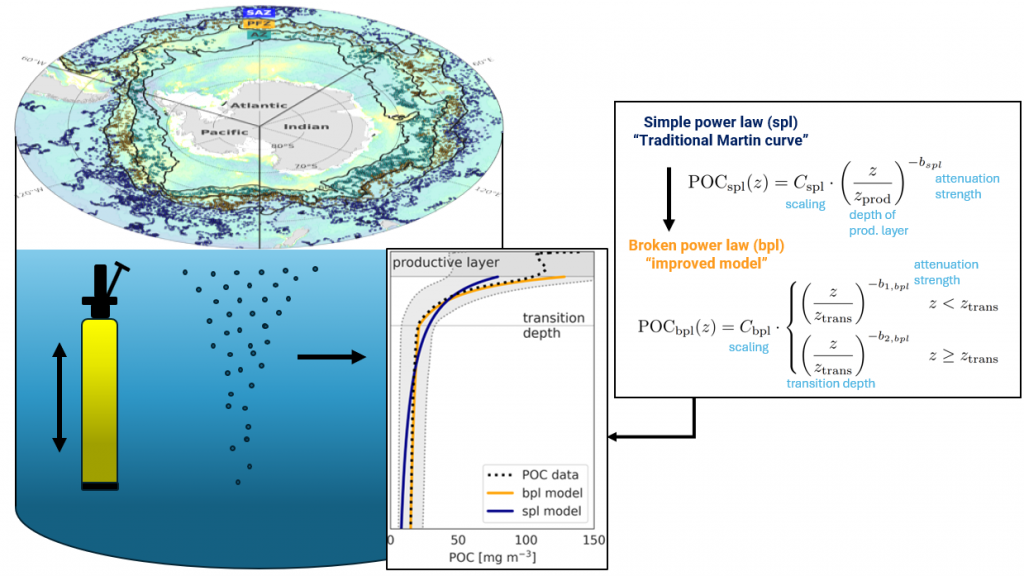
| BGC Argo Webinar #8 Comparing BGC-Argo observations with models https://youtu.be/6XclbUk2DAs | 2024 October 16 | Ellen Park (Woods Hole Oceanographic Institution) Quantifying biological carbon pump parameters from the global Biogeochemical Argo float array Adam Stoer (Dalhousie University) Estimating marine phytoplankton biomass and productivity from Biogeochemical-Argo floats | Serra-Pompei: Assessing the potential of backscattering as a proxy for phytoplankton carbon biomass The particulate backscattering coefficient (bbp) has often been used as an optical proxy to estimate phytoplankton carbon biomass (Cphy). However, total observed bbp is impacted by phytoplankton size, cell composition, and non-algal particles. The scarcity of phytoplankton carbon field data has prevented the quantification of uncertainties driven by these factors. Here, we first review and discuss existing bbp algorithms by applying them to bbp data from the BGC-Argo array in surface waters (<10m) and show that errors can be large when the bbp signal is low. Next, we use a global ocean circulation model (the MITgcm Biogeochemical and Optical model) that simulates plankton dynamics and associated inherent optical properties to quantify and understand uncertainties from bbp-based algorithms in surface waters. In an ideal world where field data has no methodological uncertainties, the model shows that bbp algorithms could estimate phytoplankton carbon biomass with an absolute error close to 20% in most regions. Galí Tàpias: Constraining stocks and fluxes of Particulate Organic Carbon (POC) through the comparison between particulate backscattering measurements and the PISCESv2 model BGC-Argo data offers a great opportunity for model evaluation, optimization, and the development of improved parameterizations, ultimately furthering our mechanistic understanding. However, comparison between BGC-Argo observations and models requires careful consideration of the spatiotemporal scales that each of them can resolve. When using particulate backscattering (bbp) as a proxy for particulate organic carbon (POC), additional attention must be paid to the variability in the POC/bbp ratio, its uncertainty, and its underpinning biogeochemical drivers. In this talk I will present comparisons between bbp from BGC-Argo and simulated POC based on both 3D (Eulerian) and 1D (pseudo-Lagrangian) frameworks. I will discuss the potential and limitations of model parameter optimization using BGC-Argo bbp as the observational reference. Finally, I will explore the impacts of optimized model parameters on mesopelagic POC budgets and vertical fluxes in the PISCESv2 model. | BGC Argo |
| Leaky Deltas - biogeomorphology and Arctic deltas https://youtu.be/yPpIPmXYdVo?feature=shared | 2024 September 26 | Muriel Bruckner (LSU) - Modeling ecogeomorphic feedbacks in deltas to quantify the role of abiotic and biotic processes Anastasia Pillouras (PSU) - The role of Arctic deltas in modulating land-ocean fluxes | Leaky Deltas | |
| Meta-eukomics: Intercomparison of metatranscriptomic methods for characterizing microbial eukaryote contributions to the biological carbon pump https://youtu.be/p6sqe5XYrHw | 2024 August 27 | Sarah Smith (Assistant Professor, Moss Landing Marine Laboratories) - Metatranscriptomics of Monterey Bay Phytoplankton During Experimental Upwelling Mesocosm Experiments Mora Groussman (Postdoctoral Scholar, Univ. Washington) - Using the MarFERReT eukaryotic sequence library for dynamic, custom and reproducible reference libraries | Meta-Eukomics | |
| Leaky Deltas series #3 https://youtu.be/vqeRbXuWbe4 | 2024 May 30 | Bob Aller (Stony Brook Univ) - Shoreward transport in deltaic systems: the coastal vacuum and reactive particle processing | Leaky deltas Workshop series https://www.us-ocb.org/leaky-deltas-workshop-2025/ |
|
| Webinar #2 related to the OCB2024 plenary session: Evolving understanding of viral dynamics in marine ecosystems https://youtu.be/PEDUw3I00Yg | 2024 May 20 | Debbie Lindell (Technion - Israel Institute of Technology) Kim Thamatrakoln (Rutgers Univ.) Marcie Marston (Roger Williams Univ.) | OCB2024 Marine virus plenary | |
| Pathways workshop webinar #3 https://usclivar.org/webinars | 2024 May 16 | Talia Evans (UCSB) | Hosted by partner US CLIVAR more info at https://usclivar.org/webinars | Pathways Connecting Climate Changes to the Deep Ocean Webinar Series https://usclivar.org/meetings/pathways-connecting-climate-changes-to-deep-sea |
| GO-BGC Webinar #7 – High Latitude Ocean Biogeochemistry https://youtu.be/6rWOkrW7b4w | 2024 May 9 | Yui Takeshita (MBARI) - An update on the GO-BGC program Daniel Koestner (University of Bergen, Norway) - Biogeochemical properties of the Lofoten Basin Eddy from 14 years of BGC-Argo float data Sophie Shapiro (University of California San Diego, USA) - Lessons and opportunities from the Southern Ocean Sea Ice team at the 2023 GO-BGC Float Data Workshop | Please join us for the quarterly GO-BGC webinar, hosted by the US Ocean Carbon and Biogeochemistry Project Office. This webinar will be focused on high-latitude ocean biogeochemistry by exploring the research of two groups that participated in the 2023 GO-BGC/BGC Argo Float Data Workshop at the University of Massachusetts Boston. The webinar will begin with an update on the status of the GO-BGC float array, followed by two short presentations. We’ll then close with a community discussion and Q and A session. Recordings will be available on the OCB and GO-BGC websites. | BGC Argo Webinar Series #7 |
| Webinar #1 related to the OCB2024 plenary session: Evolving understanding of viral dynamics in marine ecosystems Co-chairs: Jessica Labonté (TAMU-G), Sheri Floge (Wake Forest Univ.), Jeff Bowman (Scripps Inst. Oceanography) https://youtu.be/tPQ8kWF-IAc | 2024 May 8 | Rui Zhang (Shenzhen University) Flora Vincent (European Molecular Biology Laboratory) | Viruses are an integral component of marine microbial communities, facilitating flux between particulate and dissolved carbon pools. Despite their known prevalence and activity in marine systems, fundamental knowledge gaps prevent the inclusion of viruses in current carbon cycling models. This OCB plenary session and webinar series will summarize the current state of understanding of key functions and pathways mediated by viruses in marine food webs. Speakers will share ecological insights from virus-host models, ecosystem-wide studies, and explore the role of viral dynamics in carbon transformation and biological carbon export. | OCB2024 Marine virus plenary |
| NEW ACTIVITY webinar series: Meta-eukomic: Intercomparison of metatranscriptomic methods for characterizing microbial eukaryote contributions to the biological carbon pump https://youtu.be/cCCf_dieIQc | 2024 May 1 | THEME: omics intercomparisons and proteomic/transcriptomic applications in the field Mak Saito (WHOI) and Erin Bertrand (Dalhousie University) | OCB is supporting an exciting new small group activity called META-EUKOMICS, being led by Harriet Alexander (WHOI), Natalie Cohen (UGA), Sarah Hu (TAMU), and Adrian Marchetti (UNC Chapel Hill). The goal of this working group is to determine how various methodological choices made during metatranscriptome processing influence downstream biological interpretations. This group is broadly interested in microbial ecology, with a focus on the utility of omic tools, their development, and how they can be used to further our understanding of marine microbial diversity and function. They look forward to discussing other omic intercomparison efforts and what can be learned from these exercises. | Meta-Euk series |
| Subtropical deltas - Leaky Deltas series #2 https://youtu.be/cKBaK79jEms | 2024 April 18 | Preservation mechanism of sedimentary organic carbon in the Changjiang Estuary (Bin Zhao, First Institute of Oceanography) Musings on mud: A key medium in deltaic coastal biogeochemistry and beyond (Thomas Bianchi, Univ. Florida) | Leaky deltas Workshop series https://www.us-ocb.org/leaky-deltas-workshop-2025/ |
|
| Pathways Workshop webinar #2 https://youtu.be/dKUCg_aMvmU?si=OtTqS2xH_hyVrtIt | 2024 April 18 | Henry Ruhl (Monterey Bay Aquarium Research Institute) - Long-term abyssal time series and what they tell us about climate impacts on the deep sea Amy Maas (Arizona State University-Bermuda Institute of Ocean Sciences) - Biological and biogeochemical pathways of carbon into the deep sea | Pathways Connecting Climate Changes to the Deep Ocean Webinar Series https://usclivar.org/meetings/pathways-connecting-climate-changes-to-deep-sea |
|
| Pathways workshop webinar #1 https://youtu.be/YeHIS7qTjOA?feature=shared | 2024 April 11 | Baylor Fox-Kemper (Brown University) - Which ocean variables and climate variables? The "recalcitrant" deep water mode correlates with surface processes, climate sensitivity, and thermosteric sea level rise Isabel Le Bras (WHOI) - Pathways for dense waters into the deep North Atlantic: Lessons from OSNAP and OOI | Pathways Connecting Climate Changes to the Deep Ocean Webinar Series https://usclivar.org/meetings/pathways-connecting-climate-changes-to-deep-sea |
|
| Subtropical deltas - Leaky Deltas series #1 https://youtu.be/ilIbOVxgesg | 2024 March 14 | Biogeochemical dynamics in deltaic sediments: The importance of the organic matter origin and event-driven variability - Christophe Rabouille (Laboratoire des Sciences du Climat et de l'Environnement) | Leaky deltas Workshop series https://www.us-ocb.org/leaky-deltas-workshop-2025/ |
|
| Carbon Export Dynamics https://youtu.be/Cx8mjEWGrlg | 2024 January 31 | Ellen Park (Woods Hole Oceanographic Institution) Quantifying biological carbon pump parameters from the global Biogeochemical Argo float array Adam Stoer (Dalhousie University) Estimating marine phytoplankton biomass and productivity from Biogeochemical-Argo floats | GO BGC Webinar Series #6 | |
| Elemental Cycling https://youtu.be/jKMHF54CiE8 | 2023 November 28 | Speakers: Kanchan Maiti (LSU) "Oxygen and carbon dynamics in Mississippi river influenced shelf sediments", Chris Somes (GEOMAR) "The impact of reductive sedimentary iron release on changing ocean biogeochemistry simulations of the Anthropocene" | BECS | |
| International Data Management and Repository Collaborations for BioGeoSCAPES https://youtu.be/jXsUykzY97A | 2023 August, 30 | What can we learn from other ocean, data-rich programs to help create a successful international BioGeoSCAPES data model? Stéphane Pesant – European Bioinformatics Institute (EMBL-EBI) Reiner Schlitzer – Alfred Wegener Institute for Polar and Marine Research Danie Kinkade – Biological and Chemical Oceanography Data Management Office Karen Stocks – CLIVAR and Carbon Hydrographic Data Office (CCHDO) | One of the challenges facing large research programs is the ability to manage and archive datasets. In this panel we will gather experts with experience in data management for oceanographic research programs and hear about their experiences. We will have a discussion with the community about the challenges they have faced and what challenges an interdisciplinary program like BioGeoSCAPES will face. Audience participation will be invited to collect ideas from the community using online tools. A future webinar will be focused on data integration and management strategies. Together these webinars will help contribute to a workshop on data management and informatics. | BioGeoSCAPES |
| BECS Webinar: Benthic Organisms and Biogeochemistry https://youtu.be/07hTcAMk-ik | 2023 July 11 | Clare Woulds, University of Leeds Chih-Lin Wei, National Taiwan University | Benthic Ecosystem and Carbon Synthesis (BECS) Working Group webinar on "Benthic Organisms and Biogeochemistry" | BECS Webinar #2 |
| New tools for BGC-Argo data access and visualization https://youtu.be/neTx8u_kze8 | 2023 June 20 | Yui Takeshita: Updates on GO-BGC (10 min) Reiner Schlitzer: Online analysis and visualization of BGC-Argo data with webODV (20 min) Hartmut Frenzel: OneArgo toolbox for accessing and analyzing Argo data - overview and new features (20 min) Q&A: 10 minutes | This webinar will have 2 presentations on new tools for BGC-Argo data access and visualization. Dr. Reiner Schlitzer will present on webODV, a new online tool based on Ocean Data View that can be used to visualize, explore, and export BGC-Argo data through a GUI interface. Dr. Hartmut Frenzel will present on the One-Argo toolbox, an open source toolbox designed to efficiently access, process, and visualize BGC, Core, and Deep Argo data. Float data can be searched using a variety of criteria including sensor type, location, and date. Recordings will be available on the OCB and GO-BGC website. | BGC Argo Webinar Series #5 |
| Introduction to Benthic Ecosystem and Carbon Synthesis | 2023 March 14 | Cristina Schultz and Jessica Luo will introduce the Benthic Ecosystem & Carbon Synthesis (BECS) working group in the context of past OCB efforts, followed by a talk from Jack Middelburg, Professor of Geosciences at Utrecht University, The Netherlands. | Introduction to new OCB working group: Benthic Ecosystem and Carbon Synthesis (BECS) https://www.us-ocb.org/becs/ | BECS Webinar Series #1 |
| Observing Mesoscale and Sub-Mesoscale Processes with BGC Argo https://youtu.be/bV_3z3KtqEA | 2023 February 15 | Yui Takeshita (Monterey Bay Aquarium Research Institute, USA) - An update on the GO-BGC program Lily Dove (California Institute of Technology, USA) - Investigating Ventilation at the Submesoscale in the Southern Ocean Shuangling Chen (Second Institute of Oceanography, Ministry of Natural Resources, Hangzhou, China) - Episodic oxygen injections observed from BGC-Argo Community Discussion | This webinar focused on using BGC-Argo float data to investigate chemical and biological processes in the ocean that are influenced by eddies, meanders, and other mesoscale and sub-mesoscale processes. | BGC Argo Webinar Series #4 |
| SOLAS-OCB Sea Surface Microlayer https://youtu.be/cJDkL-T9Jm4 | 2023 January 27 & February 10 | Luc Deike (Department of Mechanical and Aerospace Engineering, Princeton University, United States) - Ocean spray aerosols generation: From breaking waves to bursting bubbles Andrew Wozniak (School of Marine Science and Policy, University of Delaware, United States) Untargeted, high resolution mass spectrometry for characterizing surfactant organic matter in the sea surface microlayer Sarah Brooks (Department of Atmospheric Sciences, Texas A&M University, United States) - Influence of the sea surface microlayer composition on cloud formation | The sea surface microlayer is an important interface controlling the transfer of energy, material and gases between the oceans and the atmosphere, and has been a primary focus of the SOLAS programme since its inception. The five SOLAS themes all include processes that affect and are affected by the sea-surface microlayer, including marine ecology, photochemistry, free radical/thermal chemistry, greenhouse gases and gas exchange, primary aerosol production, and atmospheric deposition. Therefore, the sea surface is one of five cross-cutting themes explored in the new United States SOLAS Science Plan, which was released in 2021. This seminar highlights some recent work at this exciting interface. Rachel Stanley (Department of Chemistry, Wellesley College, United States) Yuan Gao (Department of Earth and Environmental Sciences, Rutgers University, United States) On behalf of the OCB Ocean-Atmosphere Interactions Committee (OAIC) | SOLAS-OCB joint event |
| Organizing Intercalibration Efforts for BioGeoSCAPES: A Panel Discussion https://youtu.be/A-hU3_gxz8s | 2023 January 25 | Maite Maldonado – Introduction and Webinar Goals Daniel Petras and Jeffrey Hawkes – Metabolomics Intercalibration update Adrian Marchetti – US Nucleic Acids Intercalibration Workshop Results Mak Saito – Ocean Metaproteomics Intercomparison Update and Sampling Material Luke Thompson, Alyse Larkin and Harriet Alexander – BioGoSHIP Nucleic Acids Intercomparison Daniele Iudicone – Perspectives from AtlantEco/Tara Julie LaRoche – Rates Measurement Intercalibration Open Plenary Discussion | Producing data that can be effectively compared across space and time is a critical aspect of developing a collaborative international microbial biogeochemistry program. Intercalibration activities involving validation of precision and accuracy and development of intercomparison standards are foundational to the production of interoperable data. With BioGeoSCAPES aiming to launch mid-decade, further progress must be made to ensure high-quality data collection. This virtual panel will include perspectives from a variety of communities (nucleic acids, metabolomics, proteomics, rates) and encourage brainstorming through small group discussions. This panel discussion initiates important discussions and community-building in preparation for an international BioGeoSCAPES science planning workshop in Woods Hole, MA USA (tentatively scheduled for Fall 2023). See: Twining, Benjamin S., Saito, Mak A., Santoro, Alyson E., Marchetti, Adrian, Levine, Naomi M., “US National BioGeoSCAPES Workshop Report”, 2023-01-09, DOI:10.1575/1912/29604, https://hdl.handle.net/1912/29604 | |
| Using BGC floats for the study of extreme events https://youtu.be/UttSHhBvnms | 2022 October 5 | Yui Takeshita (Monterey Bay Aquarium Research Institute, USA) - An update on the GO-BGC program Jakob Weis (Institute for Marine and Antarctic Studies, Australia) - Using BGC-Argo floats to study phytoplankton blooms stimulated by the 2019-2020 Australian bushfires Magdalena Carranza (Monterey Bay Aquarium Research Institute, USA) - The role of storms on air-sea CO2 flux in the Southern Ocean Discussion | The first of two consecutive webinars focused on using BGC-Argo float data to investigate chemical and biological processes in the ocean that are influenced by weather and extreme events. | BGC Argo Webinar Series #3 |
| Understanding ecological dynamics using BGC-Argo data https://youtu.be/eUcJsBi7x2Y | 2022 June 29 | Yui Takeshita (Monterey Bay Aquarium Research Institute): An update for GO-BGC program Nicholas Bock (Columbia University): Biogeographical classification of the global ocean from BGC-Argo Floats Marin Cornec (NOAA Pacific Environmental Laboratory): Dynamics of the deep chlorophyll maxima at a global scale based on bio-optical measurements of BGC-Argo floats Mariana Bif (Monterey Bay Aquarium Research Institute): The impact of heatwaves on the northeast Pacific ecosystem | GO-BGC Webinar #2 (29 June 2022) focused on investigations of phytoplankton phenology and variability at regional to global scales using a range of chemical and bio-optical sensors on the BGC-Argo floats. Three short presentations about exciting new work in this area, followed by a community discussion about best practices, challenges, and future perspectives of using BGC-Argo data to advance our understanding of ecological dynamics and the footprint of progressive climate change on the ocean. | BGC Argo Webinar Series #2 |
| FAIR data solutions to support a global observing system of marine ecological time series https://youtu.be/4iFM7IAxZHU | 2022 May 9 | Overview of METS RCN (Heather Benway, OCB/WHOI) What is FAIR and why do we need it in ocean science? (Adam Shepherd, BCO-DMO) Shipboard time series use cases Carbon-relevant biogeochemical EOVs in a time series data product (Nico Lange, GEOMAR) Hawai’i Ocean Time-series (HOT) parameter mapping to Climate & Forecast (CF) vocabulary (Fernando Carvalho-Pacheco, UH) ENVRI-FAIR and Intelligent query dissolved oxygen use case (Justin Buck, NOC) Q&A and open discussion | A community meeting (a repeat of a recent Ocean Sciences Town Hall Meeting to enable broader participation) to learn more about a new NSF EarthCube-funded Research Coordination Network for Marine Ecological Time Series (METS-RCN) tasked with bringing together members of the oceanographic, data science, and informatics communities to build consensus on key components of a FAIR (Findable, Accessible, Interoperable, Reusable) data model for METS, including common vocabularies, metadata reporting standards, and data citation practices; engage broader METS data users (e.g., modelers, educators, decision makers) to facilitate broader applications of METS data; and build community capacity for METS data analysis, statistical methods, and data-model integration. This town hall meeting will also highlight a concurrent EuroSea-funded project led by members of the RCN leadership team focused on developing a pilot biogeochemical time series data product to help visualize spatial patterns and trends across ocean basins. | METS-RCN |
| GO-BGC Science Webinar kickoff https://youtu.be/xBgj05ZiNbU | 2022 March 30 | Introduction to the GO-BGC webinar series (Yui Takeshita, MBARI) Introduction to BGC-Argo and GO-BGC (Alison Gray, University of Washington) Upcoming float deployment plans (Yui Takeshita, MBARI) How to use BGC-Argo data? (Jonathan Sharp and Hartmut Frenzel, NOAA PMEL) What is the quality of BGC-Argo data? (Yui Takeshita, MBARI) Discussion and community Q&A | GO-BGC will host quarterly webinars about emerging science using GO-BGC or BGC-Argo float data, focusing on early career researchers. The webinar series is hosted by the US Ocean Carbon and Biogeochemistry program. The kickoff webinar is focused on updating the status of GO-BGC and BGC-Argo, projected float deployment locations over the next year, followed by community Q&A. | BGC Argo Webinar Series #1 |
| OCB-US CLIVAR Ecological Forecasting Workshop webinar https://youtu.be/8fL8YnyymAg | 2022 January 11 | Simone Alin (NOAA PMEL) | The Olympic Coast as a sentinel: Integrated social-ecological vulnerability assessment and co-developing ocean resource management tools with tribal and state managers As part of a regional vulnerability analysis, our team synthesized existing oceanographic data sets and model projections to understand how the frequency, duration, and severity of ocean acidification and co-stressor (warming, hypoxia) conditions may change between now and the end of the century and affect biological resources. Meanwhile, social scientists worked with Washington's coastal treaty tribes to identify the marine species of highest cultural and subsistence value to the tribes and to assess social vulnerability of tribal communities to changing ocean conditions. Ultimately the oceanographic synthesis and projections will inform tribal adaptation actions. On a related project, many of the same team worked with state and tribal managers to develop tools useful to managers of the Dungeness crab fishery in state and tribal fishing areas. In this talk, I will briefly describe scientific results and products of our collective work, but will focus as much on the challenges and lessons learned from working with this diverse team, consisting of natural and social scientists (working across academic institutions; federal, state, and tribal agencies) and tribal community members. | |
| Exploring the ocean iron cycle - biological drivers and novel isotopic methods https://youtu.be/ir6a6j44MqU | 2021 March 23 | Anh Pham (Sorbonne University, France) Biological processes control the ocean iron distribution Tim Conway (University of South Florida) Fe isotopes highlight sources of Fe to the ocean interior: Ten years of GEOTRACES progress Informal chat with speakers | ||
| Tropical storm impacts on carbon transport across the aquatic continuum https://youtu.be/GuNW8aU0pj4 | 2021 March 9 | Chris Osburn (North Carolina State University) It was a dark and stormy decade: A tale of hurricanes and coastal carbon cycling in North Carolina Ge Yan (Chinese Academy of Sciences) Hurricanes accelerate carbon cycling in coastal ecosystems | Joint OCB-NACP Extreme events and the coastal carbon cycle webinars |
|
| Wildfire impacts on coastal productivity and biogeochemistry https://youtu.be/d9g3OCbjDN0 | 2021 February 23 | Sasha Kramer (University California, Santa Barbara) Observations of phytoplankton community composition in the Santa Barbara Channel during the Thomas Fire Matthew Jones (University East Anglia) Impacts of fire on terrestrial and oceanic carbon storage | Joint OCB-NACP Extreme events and the coastal carbon cycle webinars | |
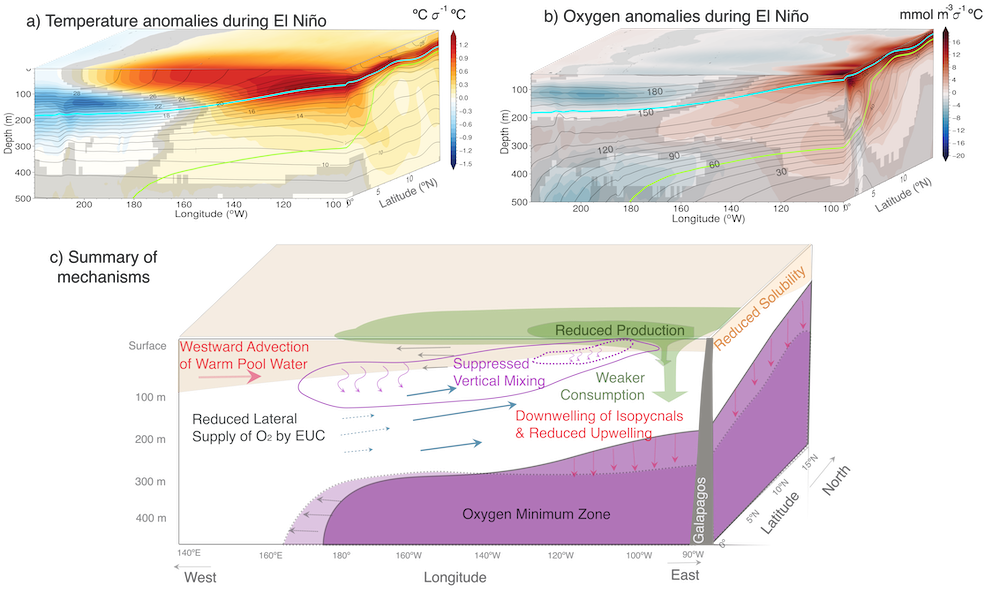
| Regional and global perspectives on ocean deoxygenation https://youtu.be/b21brR_zNPM | 2021 February 9 | Mathilde Jutras (McGill University, Canada) Changes through time in the causes of oxygen decline in the St. Lawrence Estuary: From biogeochemistry to circulation Marina Levy (Sorbonne University, France) Evolution of oxygen minimum zones under global deoxygenation | ||
| Ocean Acidification Impacts in the North Atlantic https://youtu.be/LzdHTnkhzw8 | 2021 January 26 | Louise Cameron (Woods Hole Oceanographic Institution) The consequences of ocean warming and acidification for the Atlantic sea scallop fishery Marcos Fontela (CCMAR - Centre of Marine Sciences of Algarve) The Northeast Atlantic is running out of excess carbonate in the horizon of cold-water corals communities | ||
| Spatial and temporal perspectives on the role of rivers in the Arctic coastal carbon cycle https://youtu.be/cix-ZE5YGso | 2020 December 15 | Andrea Pain (UMCES Horn Point) Riverine export of carbon and nutrients from deglaciating Arctic landscapes: Implications for past and future climate transitions Alexander Polukhin (Shirshov Institute of Oceanology RAS, Moscow, Russia) Carbonate system changes in the Russian Arctic Seas | ||
| EXPORTS: Field Campaign and Project Updates https://youtu.be/DvMnxN26JyU | 2021 November 17 | Dave Siegel (UCSB) Introduction Jason Graff (OSU), Sasha Kramer (UCSB) - Phytoplankton community structure Coauthors: Erin Jones (URI), Lee Karp-Boss (UMaine), Collin Roesler (Bowdoin), Tatiana Rynearson (URI), Heidi Sosik (WHOI) Melanie Feen (URI), Meredith Meyer (UNC), Shannon Burns (USF) - Production/Diel Productivity Coauthors: Adrian Marchetti (UNC), Bethany Jenkins (URI), David Roo Nicholson (WHOI), Heather McNair (URI), James Fox(OSU), Kim Halsey (OSU), Kristen Buck (USF), Salvatore Caprara (USF), Mark Brzezinski (UCSB), Melissa Omand (URI), Mike Behrenfeld (OSU), Sarah Lerch (URI), Shawnee Traylor (WHOI/MIT), Susanne Menden-Deuer (URI), Weida Gong (UNC) Karen Stamieszkin (VIMS) - Mesozooplankton Coauthors: Deborah Steinberg (VIMS), Amy Maas (BIOS), Joe Cope (VIMS), Andrea Miccoli, (ex-BIOS) Chandler Countryman (UGA), C. Carlson (UCSB), C. Durkin (MLML), M. Omand (URI) Brandon Stephens (UCSB), Garrett Sharpe (UNC) - Microbial processing Coauthors: Craig Carlson (UCSB), Scott Gifford (UNC) Sarah Lerch (URI) - Food web synthesis Coauthors: Heather McNair (URI), James Fox (OSU), Meredith Meyer (UNC), Amy Maas (BIOS), Tatiana Rynearson (URI), Acacia Zhao (UNC) , Alex Niebergall (Duke), Alyson Santoro (UCSB), Annie Bodel, Ben Van Mooy (WHOI), Brandon Stephens (UCSB), Brian Popp (UHawaii), Claudia Benitez-Nelson (USC), Colleen Durkin (MLML), Craig Carlson (UCSB), Dave Siegel (UCSB), Elisa Romanelli (UCSB), Eric D'Asaro (UW), Erin Jones (URI), Ewelina Rubin (URI), Garrett Sharpe (UNC), Heidi Sosik (WHOI), Henry Holm (WHOI), Hilary Close (UMiami), Jason Graff (OSU), Bethany Jenkins (URI), Kana Yamamoto (UCSB), Karen Stamieszkin (VIMS), Kristen Buck (USF), Kristofer Gomes (URI), Lee Karp-Boss (UMaine), Adrian Marchetti (UNC), Mark Brzezinski (UCSB), Meg Estapa (UMaine), Melanie Cohn (UNC), Melissa Duhaime (UMichigan), Susanne Menden-Deuer(URI), Nicola Paul (UCSB), David Roo Nicholson (WHOI), Salvatore Caprara (USF), Sasha Kramer (UCSB), Scott Gifford (UNC), Shannon Burns (USF), Victoria Fulfer (URI), Weida Gong (UNC) Andrew McDonnell (UAlaska), Xiaodong Zhang (USM) - Particle size distribution Coauthors: Lianbo Hu (UND), Yuanheng Xiong (UNDakota - UND), Deric Gray (NRL), Yannick Huot (USherbrooke), Rachel Lekanoff(UAlaska), Jessica Pretty (UAlaska), Brita Irving (UAlaska), Dave Siegel (UCSB), Norm Nelson (UCSB), Lee Karp-Boss (UMaine), Emmanuel Boss (UMaine), Guillaume Bourdin (UMaine), Nils Haentjens (UMaine), Marc Picheral (CNRS, LOV), Lionel Guidi (CNRS, LOV) Hilary Close (UMiami) - Vertical sinking and processing of particulate organic matter (POM) Coauthors: Meg Estapa (Univ. Maine), Vinicius Amaral (UCSC), Olivier Marchal (WHOI), Phoebe Lam (UC Santa Cruz), Elisa Romanelli (UCSB), Uta Passow (Memorial UNewfoundland), Muntsa Roca Marti (WHOI), Ken Buesseler (WHOI), Claudia Benitez-Nelson (USC), Colleen Durkin (MLML), Melissa Omand (URI), Annie Bodel (MLML), Alyson Santoro (UCSB), Pat Kelley (URI), Paul Wojtal (UMiami), Shannon Doherty (UMiami), Brian Popp (UHawaii), Connor Shea (UHawaii) Muntsa Roca Martí (WHOI) - Radiochemical assessments of flux Coauthors: Ken Buesseler (WHOI), Claudia Benitez-Nelson (USC), Laure Resplandy (Princeton) Alex Niebergall (Duke), Shawnee Traylor (WHOI/MIT), Roo Nicholson (WHOI) - Biogeochemical mass balances Coauthors: Andrea Fassbender (NOAA PMEL), Muntsa Roca Marti (WHOI), Brandon Stevens (UCSB), Huang, Adrian Marchetti (UNC), Meredith Meyer (UNC), Melissa Omand (URI), Melanie Feen (URI), Nicolas Cassar (Duke), Yibin Huang (UCSC) Dave Siegel (UCSB) - Wrap up | ||
| Productivity and marine snow dynamics: Novel approaches and measurements of the biological pump https://youtu.be/pYrqkop7SWo | 2020 November 3 | Amanda Timmerman (UCSD) Fronts implicated as the missing mechanism driving phytoplankton variability in the iron-limited subarctic NE Pacific Klas Ove Möller (Institute of Coastal Research, HZG) Sinking vs. remineralisation: Active controls of zooplankton on marine snow dynamics | ||
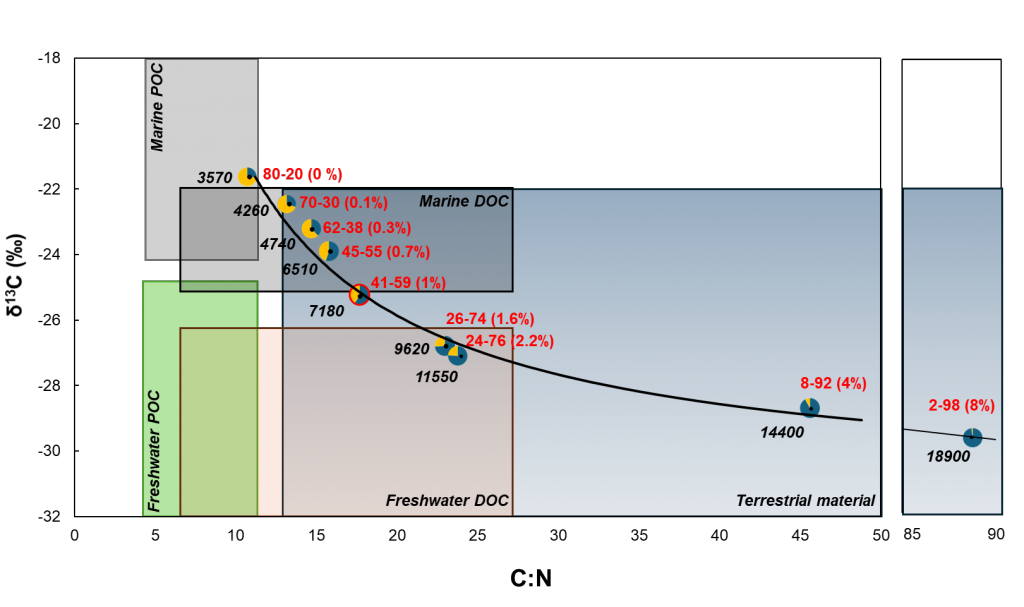
| New insights on the marine nitrogen cycle https://youtu.be/2rwiO-ZAoOY | 2020 October 6 | Clara A. Fuchsman (UMCES Horn Point Laboratory) Quantification of organic matter sources for N2 production in oxygen minimum zones Francisco J. Cervantes (Universidad Nacional Autónoma de México) Novel microbial processes potentially interconnecting global biogeochemical cycles in marine environments | ||
| Changes in the ocean's organic carbon cycle https://youtu.be/2ipgrJUPXWo | 2020 September 8 | Cristina Romera Castillo (Instituto de Ciencias del Mar-CSIC) Net production of dissolved organic carbon in the deep ocean Emma Cavan (Imperial College London) Ecological feedbacks to the ocean organic carbon cycle: Fishing and climate change | ||
| Modeling and machine learning approaches to study climate, carbon, and the ocean https://youtu.be/L8-A2nJ0A-Q | 2020 August 25 | Katarzyna (Kasia) Tokarska (ETH Zürich) Climate-carbon response: carbon budgets in overshoot scenarios, and in high warming models Christopher Holder (Johns Hopkins University) Machine Learning and Some Potential Uses in Oceanography | ||
| Advancing understanding of biological feedbacks on ocean biogeochemistry https://youtu.be/_7dlhjl_2DE | 2020 August 11 | Emily Zakem (University of Southern California) Redox-informed models of global biogeochemical cycles Severine Martini (Mediterranean Institute of Oceanography) Shedding light (literally!) on biological carbon pump | ||
| Physical drivers of marine biogeochemistry and ecology https://youtu.be/RfyWlkUQW_o | 2020 July 28 | Mara Freilich (MIT-WHOI Joint Program) Phytoplankton community structure in response to meso- and submeso-scale physics Natalie Freeman (University of Colorado Boulder) On the recent increase in surface silicate-to-nitrate availability in the southern Drake Passage | ||
| Physical and biogeochemical processes that drive the biological pump https://youtu.be/ZmrIb8EdVJo | 2020 July 14 | Hilary Palevsky (Boston College, Department of Earth and Environmental Sciences) The influence of winter ventilation on the ocean’s biological carbon pump Joan Llort (Barcelona Supercomputing Centre) The four dimensions of the biological carbon pump | ||
| Space-based ocean measurements https://youtu.be/802WGnYW1ts | 2020 June 30 | Jeremy Werdell (NASA) Socially distant by design: How the evolution of ocean color remote sensing contributes to aquatic biological and biogeochemical studies (NASA PACE) |
Find more detail on upcoming and past OCB webinars here, and watch recordings on topical playlists on the OCB YouTube Channel.